Reading the Holy Quran is a beautiful and meaningful part of a Muslim’s life. Every Muslim wants to recite the words of Allah correctly, understand their meanings, and improve their connection with the Quran.
However, beginners sometimes make mistakes while reading Arabic letters, pronouncing words, or applying Tajweed rules. Even people who have been reading the Quran for years may need to improve certain aspects of their recitation.
The good news is that these mistakes can be corrected through regular practice, patience, and proper guidance.
In this guide, we will explore common Quran reading mistakes, explain why they happen, and share practical tips to help you improve your Quran recitation.
Why Is Correct Quran Reading Important?
The Quran is the holy book of Islam and its recitation deserves care and attention. Reading correctly helps Muslims preserve the pronunciation of Quranic words and follow the rules of recitation.
Allah says in the Quran:
“And recite the Quran with measured recitation.” (Surah Al-Muzzammil 73:4)
This verse emphasizes the importance of thoughtful and measured Quran recitation.
Learning proper pronunciation and Tajweed can help readers develop confidence and improve their recitation.
10 Common Quran Reading Mistakes
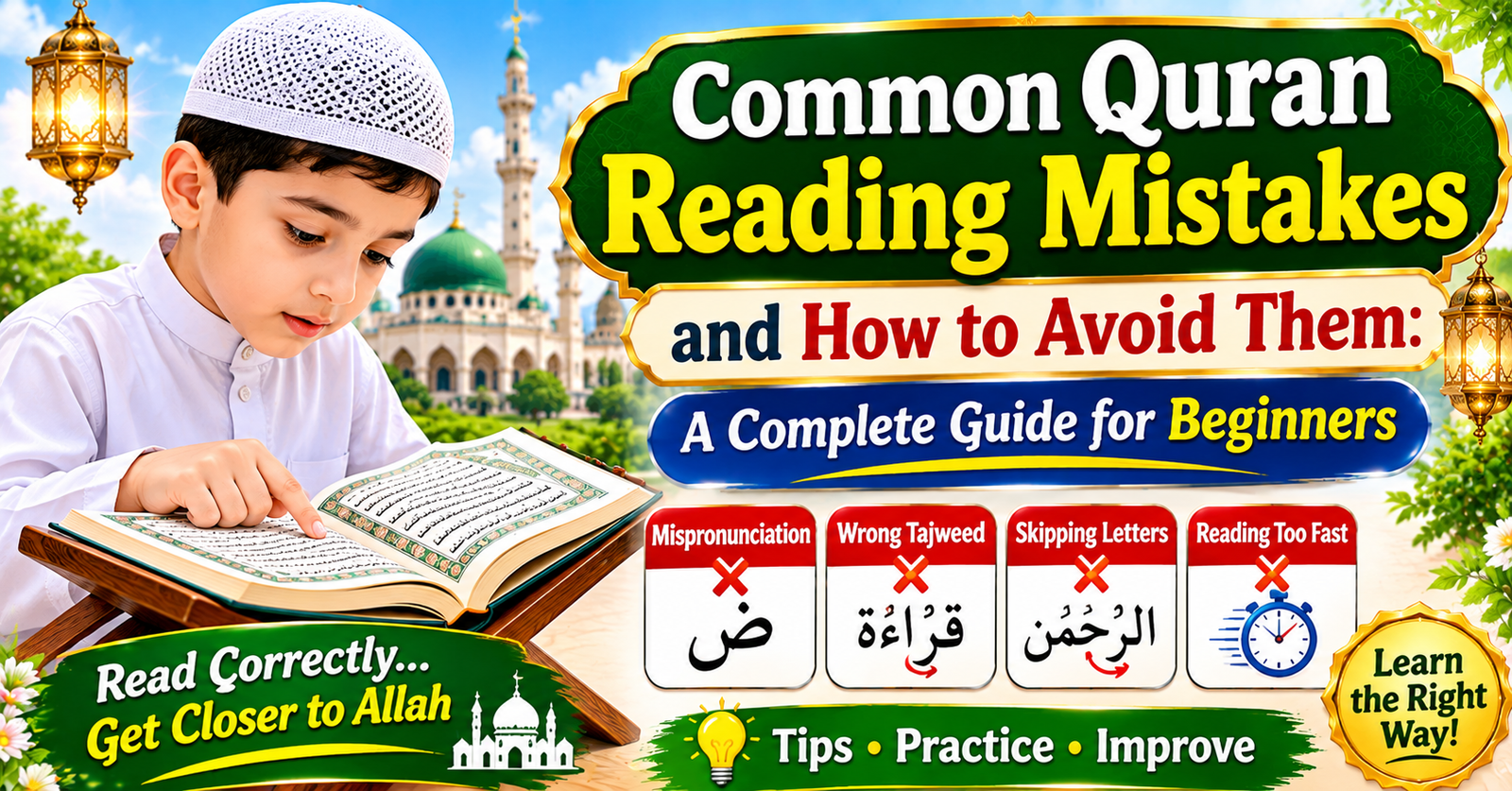
Here are ten common mistakes beginners and regular Quran readers should understand and work to avoid.
1. Mispronouncing Arabic Letters
One of the most common Quran reading mistakes is pronouncing Arabic letters incorrectly.
Some Arabic letters have similar sounds, which can make them difficult for beginners.
For example:
- س and ص
- ت and ط
- ذ and ز
- ح and ه
- ع and أ
Each letter has its own articulation point and pronunciation characteristics.
How to avoid this mistake:
Practice Arabic letters individually. Listen to a qualified Quran teacher and repeat each sound carefully. Pay special attention to letters that are difficult for you.
2. Ignoring Tajweed Rules
Tajweed helps readers pronounce Quranic letters correctly and apply the appropriate recitation rules.
Ignoring Tajweed may lead to pronunciation mistakes and incorrect elongation or merging of sounds.
Some important Tajweed topics include:
- Noon Sakinah and Tanween
- Meem Sakinah
- Madd
- Qalqalah
- Ghunnah
- Makharij Al-Huruf
How to avoid this mistake:
Learn one Tajweed rule at a time. Practice examples with a qualified teacher before applying the rule during regular recitation.
3. Reading the Quran Too Quickly
Some readers try to finish Quranic pages quickly without paying attention to pronunciation.
Reading too fast can make it difficult to pronounce letters clearly and apply Tajweed rules correctly.
How to avoid this mistake:
Slow down your recitation. Focus on each word and maintain a comfortable reading pace. Remember that correct recitation is more important than speed.
4. Incorrect Madd (Elongation)
Madd refers to extending certain sounds during Quran recitation.
Some beginners shorten sounds that should be extended or extend sounds longer than required.
Different types of Madd have different rules and durations.
How to avoid this mistake:
Learn the basic Madd rules and practice them with examples. Listen to reliable Quran recitations and ask your teacher to correct your mistakes.
5. Confusing Similar Arabic Words
Some Arabic words may look or sound similar, but their letters and meanings can be different.
Beginners who do not recognize Arabic letters properly may confuse these words.
How to avoid this mistake:
Practice reading individual words slowly. Pay attention to dots, letter shapes, vowel signs, and pronunciation.
6. Ignoring Ghunnah
Ghunnah is a nasal sound used in specific Tajweed situations.
It is commonly associated with Noon and Meem in particular recitation rules.
Some readers forget to apply Ghunnah, while others may extend it incorrectly.
How to avoid this mistake:
Study the rules of Noon Sakinah, Tanween, and Meem Sakinah. Practice with your Quran teacher to understand when Ghunnah is required.
7. Not Observing Waqf and Ibtida
Waqf refers to stopping during Quran recitation, while Ibtida refers to beginning or resuming recitation.
Stopping at an unsuitable place or restarting without considering the meaning can affect the understanding of a verse.
How to avoid this mistake:
Learn the common stopping signs found in the Quran. Follow the guidance of a qualified teacher to understand appropriate stopping and starting points.
8. Skipping Quran Reading Practice
Learning Tajweed rules is not enough if you do not practice regularly.
Without revision, beginners may forget previously learned lessons and repeat pronunciation mistakes.
How to avoid this mistake:
Create a simple daily Quran reading schedule. Even 10 to 15 minutes of focused practice can help you maintain consistency.
9. Learning Without a Qualified Teacher
Books and online videos can introduce Quran reading rules, but they cannot always identify your personal pronunciation mistakes.
Some errors are difficult to recognize without listening to someone who understands Tajweed.
How to avoid this mistake:
Study with a qualified Quran teacher whenever possible. Ask your teacher to listen to your recitation and explain how to improve difficult letters and sounds.
10. Not Revising Previous Lessons
Many learners move to advanced Tajweed lessons without revising basic concepts.
This can create confusion when they encounter difficult Quranic words.
How to avoid this mistake:
Revise previously learned rules regularly. Practice difficult examples and make sure you understand the basics before moving forward.
How to Improve Your Quran Reading Skills
Improving Quran recitation requires a simple and consistent learning routine.
Here are some practical ways to develop better reading skills.
1. Learn the Arabic Alphabet Properly
Start by recognizing all Arabic letters and learning their correct pronunciation.
If you are a complete beginner, Noorani Qaida can help you understand the basics of Arabic reading.
2. Study Basic Tajweed Rules
Do not try to memorize every Tajweed rule in one day.
Start with Makharij, short vowels, Sukoon, Shaddah, and Madd. Gradually move to more advanced rules.
3. Listen to Correct Quran Recitation
Listening to experienced Quran reciters can help you understand proper pronunciation and recitation patterns.
Choose a reliable reciter and follow along with the Quran text.
4. Practice Difficult Words Repeatedly
Make a list of words that are difficult for you to pronounce.
Read them slowly and ask your teacher for help. Repeat them until you become comfortable.
5. Record Your Recitation
Recording your Quran reading can help you notice areas that need improvement.
You can compare your pronunciation with a reliable recitation and ask your teacher to review your recording.
6. Read with a Qualified Teacher
A teacher can identify mistakes that you may not notice yourself.
Regular lessons also help you stay motivated and follow a structured learning plan.
A Simple Daily Quran Reading Practice Routine
You can follow this simple schedule to improve your recitation.
| Practice Activity | Suggested Time |
|---|---|
| Arabic letter revision | 5 minutes |
| Tajweed rule practice | 5 minutes |
| Listening to Quran recitation | 5 minutes |
| Quran reading practice | 10 minutes |
| Revision of difficult words | 5 minutes |
Adjust the routine according to your learning level and daily schedule.
Benefits of Improving Your Quran Recitation
Working on your Quran reading skills can bring several educational and spiritual benefits.
- Better understanding of Arabic pronunciation.
- Improved confidence during Quran recitation.
- Greater awareness of Tajweed rules.
- Better reading fluency.
- More consistent Quran study habits.
- A stronger connection with Quranic teachings.
Remember that learning is a gradual process. Every learner has different strengths and challenges.
Frequently Asked Questions (FAQs)
What are the most common Quran reading mistakes?
Common mistakes include mispronouncing Arabic letters, ignoring Tajweed rules, incorrect Madd, forgetting Ghunnah, reading too quickly, and stopping at unsuitable places.
How can I improve my Quran pronunciation?
Practice Arabic letters, study their articulation points, listen to reliable Quran recitation, and learn with a qualified Quran teacher.
Can I correct my Quran reading mistakes at home?
Yes. You can revise lessons, listen to recitations, and practice difficult words at home. However, a qualified teacher should review your pronunciation whenever possible.
Is Tajweed necessary for beginners?
Beginners should learn the basic pronunciation and recitation rules from the beginning. Studying Tajweed gradually helps develop correct Quran reading habits.
How much time should I spend practicing Quran reading?
Start with 10 to 15 minutes daily and increase your practice time as needed. Consistency and correct practice are more important than studying for long hours occasionally.
Can listening to Quran recitation improve my reading?
Yes. Listening to reliable reciters can help you recognize pronunciation patterns and become more familiar with proper recitation. However, listening should be combined with active practice and teacher guidance.
Conclusion
Avoiding common Quran reading mistakes is an important step toward improving your recitation. Whether you are a beginner or an experienced reader, there is always an opportunity to learn and improve.
Focus on correct Arabic pronunciation, study Tajweed rules, practice regularly, and seek guidance from a qualified Quran teacher.
Do not become discouraged when you make mistakes. Take your time, revise your lessons, and continue learning with patience.
May Allah help us recite the Holy Quran correctly, understand its message, and follow its guidance in our daily lives. Ameen.